
Lend A Hand India
About
Lend A Hand India is a nonprofit that works to make vocational education a core part of secondary schooling in government and government-aided schools. It describes India's largest skills and gender opportunity as sitting inside its schools, and its work as unlocking that opportunity by building both life skills and vocational skills, with particular attention to girls entering and leading the workforce.
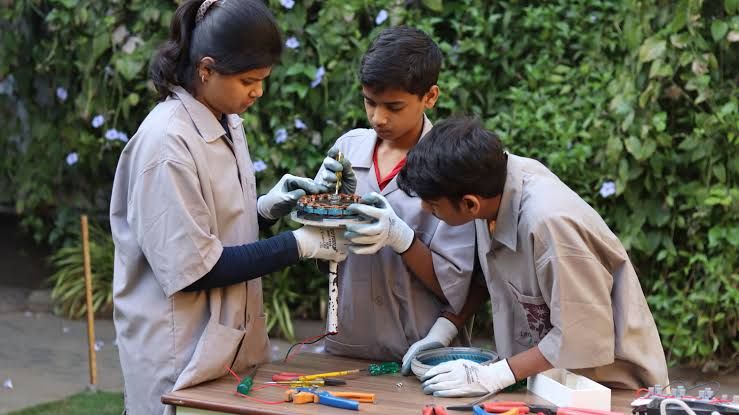
Rather than running parallel training centres, it works inside the school system: setting up labs with the required tools and equipment, recruiting and training qualified vocational trainers, arranging student internships, and getting students assessed, certified and supported into placements. Alongside direct implementation, it provides technical and project management support to state governments so vocational education can scale through public systems. It positions this model as civil society collaborating with government to implement the vocational education provisions of the National Education Policy 2020.
Headquarter: Pune, Maharashtra
Major Areas of Work
-
Skill education in schools: Introducing vocational education as a core curriculum component in government and government-aided secondary schools.
-
Government partnership and policy execution: Bridging policy and delivery by embedding team members within state education departments to help formulate and execute vocational education policy.
-
Gender and workforce participation: Applying a gender lens to skilling so that girls build the life skills and vocational skills needed to enter and lead in the workforce.
-
Work exposure and certification: Arranging internships, assessment, certification and placement support so school students leave with recognised skills and workplace experience.
-
Infrastructure and trainer capacity: Setting up school skill labs with tools and equipment, and recruiting and training qualified vocational trainers to run them.
Major Initiatives and Programmes
-
Project Swadheen: Skill education delivered directly in schools, covering labs, trainers, internships, certification and placement support.
-
Project Catalyst: Government partnership programme that gives state education departments technical and project management support to scale vocational education.
-
Internships for High School Students: Structured internship placements that give secondary school students real work exposure alongside their classroom skilling.
-
Karigar School of Applied Learning: An applied learning school where students learn through hands-on technical work.
-
Skills On Wheels and Skills@Home: Delivery innovations that take skills-based learning to students outside a fixed school lab, including an active skills-based learning at home platform.
Beyond these, the organisation runs a set of smaller innovations, including a student scholarship programme, the Junior Fellowship, Project Saad for education beyond skills, and work with Delhi's Schools of Specialized Excellence.
Project Catalyst is the route through which most of the reach happens. Lend A Hand India staff are co-located within state departments of education, working on the state's own policy and delivery rather than running a separate programme alongside it, which is what allows a small direct-implementation footprint to sit next to a much larger system-level one.
Impact
Lend A Hand India states that its direct implementation covers 150 or more schools and over 10,000 students, and that its partnerships with state governments cover more than 16,000 schools and over 2 million students. Its site elsewhere describes its reach as 24 states and 1.3 million students. It states that more than 75 of its staff members support 22 states across India, working with state governments as its principal partners.
A closing note for anyone considering the organisation: this is systems work rather than project work. Someone joining is likely to spend time inside government structures, on policy formulation, curriculum integration, trainer pipelines and delivery at state scale, rather than on a single site. It gives direct exposure to how the National Education Policy translates into classroom practice, and to the operational detail of labs, assessment, certification and employer links. It suits people who are comfortable working through public systems, who can hold both the policy conversation and the school-level execution, and who want their work measured in how many students a state system reaches.
Open Positions
View all jobs from Lend A Hand India on our jobs page.