
Wildlife Trust of India
About
Wildlife Trust of India (WTI) is one of India's leading wildlife conservation organisations, committed to protecting the country's rich biodiversity through science, community engagement, policy advocacy and on-ground conservation action. Established in 1998 by conservationists Vivek Menon, Ashok Kumar, and Tara Gandhi, WTI was founded in response to the growing threats facing India's wildlife and natural habitats.
Working closely with the Ministry of Environment, Forest and Climate Change, state forest departments, local communities, research institutions, and international conservation partners, WTI develops practical and science-based solutions to conserve wildlife and strengthen ecosystems. From a small three-member team operating out of New Delhi, the organisation has grown into a nationwide network of around 150 conservation professionals working across more than 15 field stations in India.
WTI's multidisciplinary team includes wildlife biologists, veterinarians, ecologists, sociologists, GIS specialists, legal experts, communication professionals and conservation practitioners who work together to protect endangered species, restore habitats, reduce human-wildlife conflict and support sustainable coexistence between people and wildlife.
Major Areas of Work
- Species Recovery: Conserving threatened species through research, rescue, habitat restoration, breeding, reintroduction and long-term monitoring.
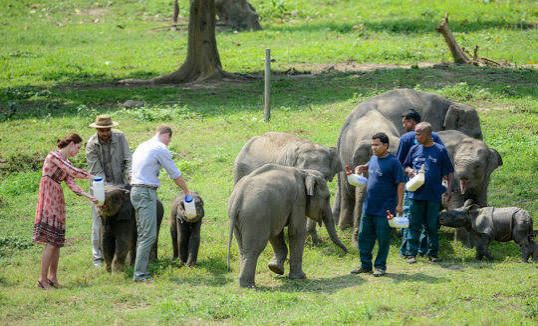
- Wildlife Rescue & Rehabilitation: Providing emergency rescue, veterinary care, rehabilitation, and release of injured, orphaned and displaced wildlife through specialised rescue teams.
- Habitat Protection: Protecting forests, wetlands, grasslands, elephant corridors, and other critical ecosystems while restoring degraded habitats.
- Human-Wildlife Conflict Mitigation: Developing practical solutions that reduce conflict between wildlife and local communities while promoting coexistence.
- Wildlife Crime Prevention: Supporting enforcement agencies through intelligence, capacity building, legal support, and anti-poaching initiatives to combat illegal wildlife trade.
- Community Conservation: Working with indigenous communities and local residents to create sustainable livelihoods linked to conservation.
- Policy & Advocacy: Supporting evidence-based conservation policies and strengthening wildlife governance across India.
- Climate & Ecosystem Conservation: Protecting landscapes that contribute to climate resilience, biodiversity conservation and ecosystem restoration.
Major Initiatives and Programmes
Elephant Corridor Mapping: WTI pioneered the first comprehensive mapping of all 101 elephant corridors across India, helping governments and conservation partners protect critical movement pathways for Asian elephants.
Bring Back Manas: A flagship landscape restoration programme implemented with the Assam Forest Department, IFAW, and local partners to revive the Manas UNESCO World Heritage Site and restore endangered wildlife populations.
Emergency Relief Network (ERN): A nationwide wildlife rescue network that provides rapid emergency response during wildlife emergencies, natural disasters and human-wildlife conflict situations.
Rapid Response Teams (RRTs): Dedicated field teams consisting of veterinarians, sociologists, and biologists that respond to wildlife emergencies and conflict situations across India.
Wildlife Crime Control Support: Technical and field-level support to enforcement agencies for investigating wildlife crime, combating trafficking and strengthening prosecution of offenders.
Mobile Veterinary Services: Specialised wildlife veterinary units providing treatment, rescue support, disease surveillance and rehabilitation for wild animals.
Community-Based Conservation Programmes: Initiatives that promote sustainable livelihoods, conservation awareness, and community participation in protecting biodiversity.
Impact
- More than 45 conservation projects implemented across 23 states.
- Active presence across 16 states and 3 Autonomous District Councils.
- Successfully mapped all 101 Asian elephant corridors in India.
- Trained over 18,000 frontline forest staff across approximately 150 Protected Areas.
- Helped secure legal protection for the whale shark, making it India's first protected fish species.
- Played a key role in banning shahtoosh wool trade, protecting the endangered Tibetan antelope.
- Successfully eliminated the dancing bear tradition in India while supporting rehabilitation and alternative livelihoods for affected Kalandar communities.
- Responded to thousands of wildlife rescue cases through its Emergency Relief Network and veterinary teams.
- Supported by organisations including HCL Foundation, ONGC, Tata Trusts, Tata Chemicals, Oracle, Apollo Tyres and several international conservation partners.
Wildlife Trust of India offers professionals the opportunity to work at the forefront of wildlife conservation in India. Employees contribute to nationally significant conservation programmes while collaborating with government agencies, research institutions, local communities, and global conservation organisations. The organisation combines rigorous scientific research with practical field implementation, making it an excellent workplace for those passionate about biodiversity conservation and environmental sustainability.
Whether working on species recovery, wildlife rescue, habitat restoration, conservation policy, veterinary science, GIS, community engagement, or environmental education, employees play a direct role in protecting India's natural heritage for future generations.
Open Positions
View all jobs from Wildlife Trust of India on our jobs page.