World Food Programme
About
The World Food Programme is the United Nations agency dedicated to fighting global hunger and improving food security, operating in over 120 countries and territories worldwide. WFP has been working in India since 1963, transitioning from food distribution to technical assistance after the country reached self-sufficiency in cereal production in the late 1980s. With the Government of India now responsible for direct food distribution, WFP's role has shifted to strengthening and improving the systems that deliver that food, focusing on efficiency, accountability, and reaching the people who need it most. WFP's current work in India is guided by the India Country Strategic Plan (2023 to 2027), an active, government partnered mandate. WFP India is headquartered in New Delhi and works closely with government bodies, state agencies, and private sector partners.
Major Areas of Work
- Public Distribution System Reform: Improving the efficiency, accountability, and transparency of India's subsidised food distribution system.
- Food Fortification: Increasing the nutritional value of government food programmes through micronutrient fortification.
- Nutrition: Addressing malnutrition, anaemia, and micronutrient deficiencies among children and vulnerable populations.
- Food Security Analysis: Mapping and monitoring food insecurity to guide policy and relief targeting.
- Social Protection: Supporting the strengthening of social protection systems and schemes, including school feeding programmes.
- Climate and Resilience: Supporting food systems and communities to adapt to climate related shocks.
- Supply Chain: Strengthening logistics and supply chain systems that underpin large scale food distribution.
Major Initiatives & Programmes
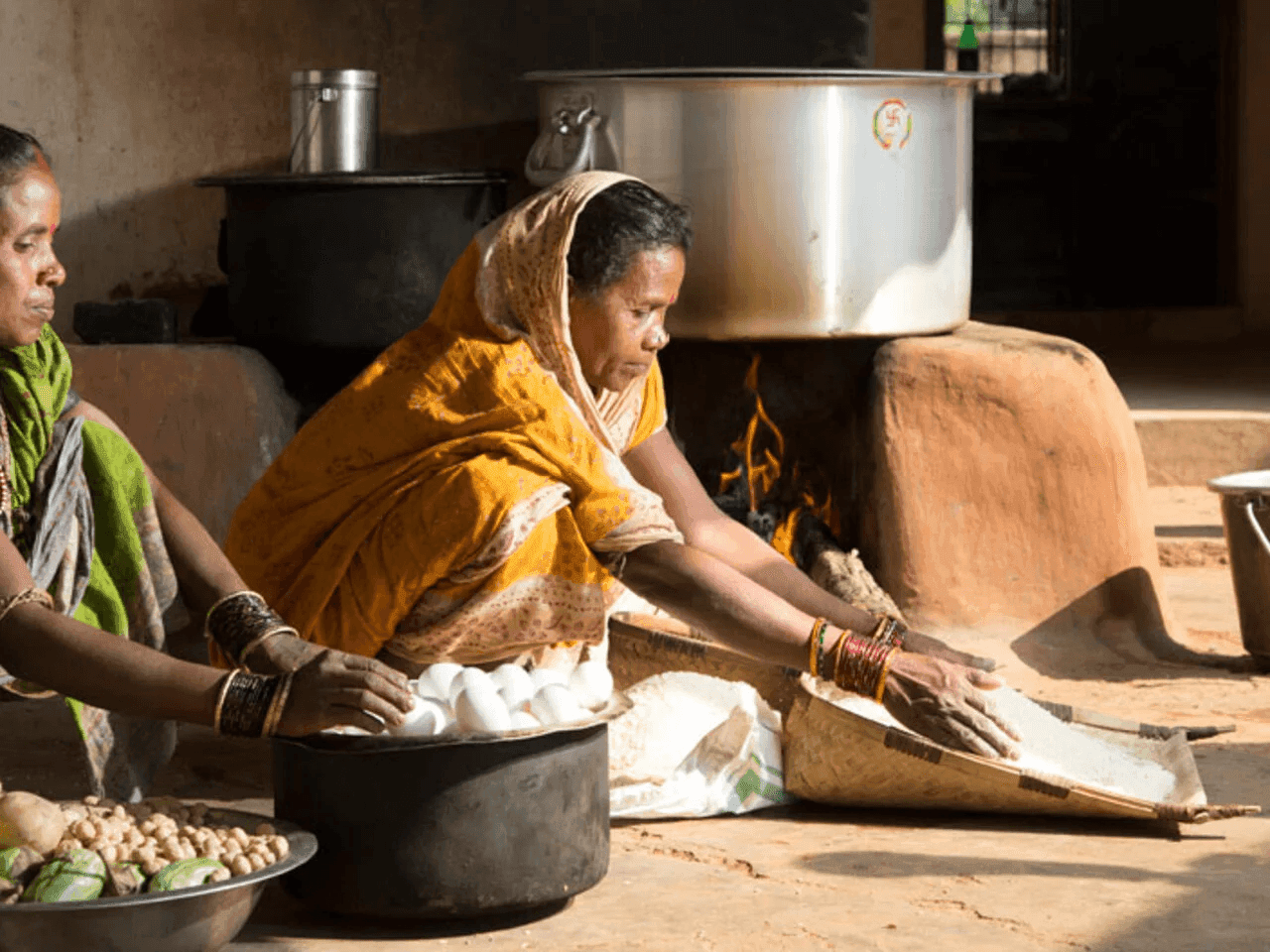
- Targeted Public Distribution System Support: Working with the Government to reform and strengthen India's subsidised food distribution system, which brings wheat, rice, sugar, and kerosene oil to around 800 million people and is one of the world's largest such systems.
- Rice and School Meal Fortification: Pioneering multi-micronutrient fortification of the Government's Mid-Day Meal school meals programme, including a rice fortification pilot in a single district that resulted in a 20 percent drop in anaemia. WFP also supports fortification of food for babies and young children in Kerala.
- Vulnerability Analysis and Mapping (VAM): Using its own software to identify India's most food insecure areas, supporting the Government's Poverty and Human Development Monitoring Agency in establishing a state-level Food Security Analysis Unit.
- PM Poshan (PM Poshan Shakti Nirman) Landscape Analysis: Technical support and analysis of the Government's national school nutrition scheme.
- India Country Strategic Plan (2023 to 2027): The current formal framework guiding all WFP programming and government partnership in the country.
Impact
- WFP has worked in India since 1963, shifting from direct food aid to technical assistance as the country became food self-sufficient.
- The public distribution system WFP supports strengthening reaches around 800 million people across the country.
- A rice fortification pilot supported by WFP resulted in a 20 percent drop in anaemia in the district where it was piloted.
- WFP's work responds to a context where anaemia affects 57 percent of women and 67 percent of children in India, and stunting among children under 5 stands at 35.5 percent, wasting at over 19 percent, and underweight prevalence at over 32 percent.
- Partners on India programmes include Ericsson, General Mills Foundation, MasterCard, Sodexo/Stop Hunger, Cargill, and the Government of India.
- Part of a global agency operating in more than 120 countries and territories, offering potential for cross-country and cross-mission career movement.
WFP India suits people interested in systems level, government facing development work rather than direct field distribution, since the organisation's role in India today is largely technical assistance, policy support, and monitoring. It appeals to people drawn to food security, nutrition science, supply chain systems, or data driven analysis, and to those who want to work within a large, established UN agency operating at national scale in partnership with government and private sector actors, with the added draw of a global mandate offering mobility across missions and countries.
Open Positions
View all jobs from World Food Programme on our jobs page.