Youth Impact
About
Youth Impact is a youth-led nonprofit that delivers health and education programmes to young people, using programmes that have already been proven to work rather than newly invented ones. It describes its model in three parts: programmes grounded in evidence, optimised through ongoing learning, and scaled through close government partnerships. Founded in Botswana in 2014, it now runs innovation hubs in Botswana, India, Namibia, South Africa and the Philippines, with a 500-strong team working from headquarters, the hubs, the field and remotely. Its core programmes cover HIV prevention and relationship decisions for adolescents, and foundational maths and literacy for primary school children. The organisation runs continuous testing on its own delivery, from peer-reviewed randomised controlled trials to iterative A/B tests, and publishes what it learns to inform policy and practice beyond its own programmes.
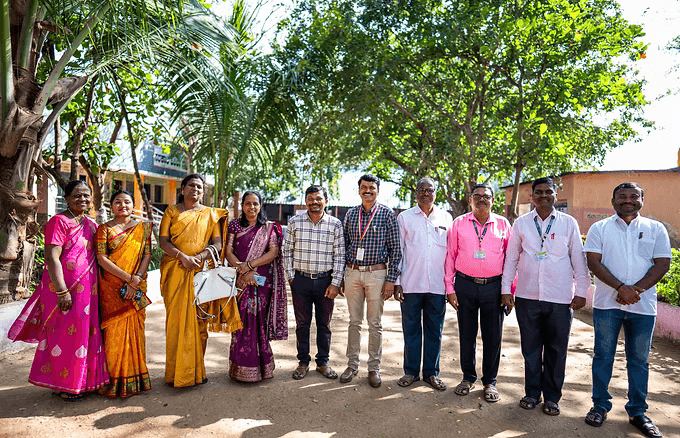
Headquarters: Gaborone, Botswana (India: Karnataka)
Major Areas of Work
-
Adolescent health: School-based sexual and reproductive health education aimed at reducing HIV risk and teenage pregnancy among young people.
-
Foundational learning: Maths and literacy instruction for primary school children who are behind grade level, delivered in classrooms and over basic mobile phones.
-
Government scale-up: Working directly with education, health and youth ministries to take programmes to district and national scale within public systems.
-
Evidence generation and testing: Randomised trials, rapid A/B tests and field learning used to decide what to keep, change or drop in live programmes.
-
Knowledge sharing: Publishing insights, impact reports and evidence so other implementers and policymakers can use what has been measured.
Major Initiatives and Programmes
-
Choices: A 90-minute programme delivered in junior secondary schools, using interactive activities and peer-led discussion to help young people make informed relationship choices and reduce HIV risk and teenage pregnancy.
-
Teaching at the Right Level (TaRL): Primary school maths and literacy instruction that groups children by current learning level rather than age or grade, now taken to national scale in Botswana.
-
ConnectEd: Phone-based tutoring that teaches maths and literacy at the student's level over a basic mobile phone, built for low-connectivity settings with no internet and no app required.
-
Ganitha Ganaka: The Karnataka version of ConnectEd, run with the Government of Karnataka.
-
A/B testing programme: A standing cycle of rapid trials, which the organisation states runs at about 15 per year, used to improve delivery of the programmes above.
Ganitha Ganaka is the largest single deployment. Youth Impact states it currently serves 180,000 students across 93 blocks in Karnataka and has trained 35,000 teachers, with a partnership agreement targeting expansion to 1.35 million students across 38,000 primary schools.
Impact
Youth Impact states it has served 700,000 young people, holds government partnerships in six countries, delivers around 15 rapid trials a year and has reached 11 million lessons. It maintains government partnerships including the Ministry of Child Welfare and Basic Education and the Ministry of Health in Botswana, the Government of Karnataka, the Ministry of Basic Education in South Africa, the Ministry of Education, Arts and Culture in Namibia and the Department of Education in the Philippines; implementing partnerships with Pratham, Save the Children, TaRL Africa, Building Tomorrow and the PAL Network; research partnerships with the University of Oxford, the London School of Economics, the University of Chicago, J-PAL and Innovations for Poverty Action; and funding from the Gates Foundation, the LEGO Foundation, the Mulago Foundation, the Stavros Niarchos Foundation, the UBS Optimus Foundation and others.
Leadership
- Noam Angrist, Co-Founder and Executive Director
- Moitshepi Matsheng, Co-Founder and Managing Director
- Claire Cullen, Head of Research and Innovation
- Rohan Katepallewar, Head of Partnerships
Working here means running programmes inside government systems at state and national scale, not pilots that stay small. The organisation measures its own work continuously, so staff see their delivery tested and changed on evidence rather than opinion, and the India hub in particular involves large-scale delivery with a state government and its teacher workforce. It suits people who want field-level delivery experience combined with research rigour, and who are comfortable working across health, education and public administration in several countries at once.
Open Positions
View all jobs from Youth Impact on our jobs page.